
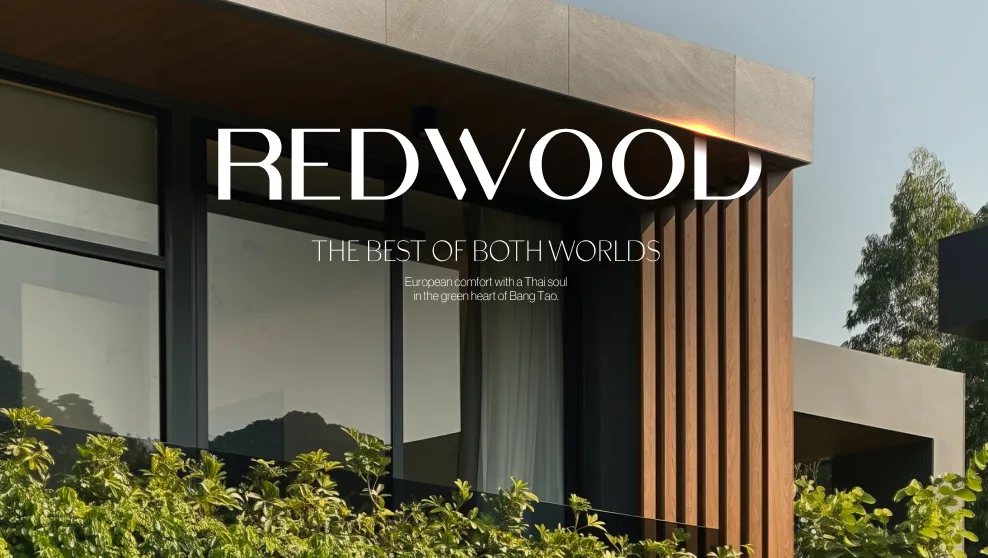
Most marketing engagements start mid-story: there’s already a brand, a website, some campaigns with history. Redwood Lakeside started at zero — no name recognition, no assets, no funnel. That’s rarer than it sounds, and it’s the best possible test of whether your process actually holds up. This post is a teardown of that process. (The condensed version lives on the project page.)
The starting point
A premium villa development in Bang Tao — one of the most competitive locations on the island — positioned around a specific idea: European comfort with a Thai soul. Three goals on the table: build the brand from the ground up, generate a steady flow of qualified buyer and investor leads, and create a marketing ecosystem the sales team could rely on rather than fight with.
Step 1 — Strategy before anything visible
The first weeks produced nothing you could screenshot: audience segmentation, competitor mapping across the Bang Tao–Layan corridor, pricing context, and a positioning document. Boring deliverables — but every later decision, from the logo to the campaign structure, traces back to them. Skipping this step is how projects end up with a beautiful website that argues for nothing.
Step 2 — Identity as a trust asset
Off-plan buyers are buying confidence in the developer as much as the villas themselves. The identity work — logo, guidelines, key visuals — was scoped with that in mind: calm, premium, consistent, and designed to survive being used by brokers and partners without falling apart.
Step 3 — Website and the sales toolkit
The website and landing pages were built around the questions buyers actually ask: the masterplan, the units, the payment logic, the ownership structure, the developer’s story. In parallel — the materials the sales conversation runs on: presentations and print, all under the same identity. The goal was that a lead could go from an Instagram ad to a broker meeting without ever feeling a seam.
Step 4 — Performance launch
Meta and Google campaigns went live only once the assets and CRM were in place — deliberately. Google captures the existing “villa in Phuket” demand; Meta builds awareness in the segments most likely to buy; retargeting keeps the project present through a decision cycle that can run for months. Creative anchors the price band openly, trading lead volume for lead quality from day one.
Step 5 — Content that makes it real
Instagram for a development project has one core job: make the unbuilt feel inevitable. Creative direction, copy and short-form video are organised around progress and place — the site, the area, the lifestyle radius around Bang Tao — rather than generic luxury wallpaper.
Step 6 — CRM and the feedback loop
Every lead lands in the CRM with its source attached, gets routed instantly, and moves through honest pipeline stages. Sales outcomes flow back into the ad platforms, so campaigns optimise toward qualified buyers instead of form-fills. Weekly reporting ties spend to pipeline, not clicks.
Full transparency: the project is live and in progress right now. I’m not publishing numbers until they’re real, complete and verifiable — results will be added to the case study as the campaign matures.
What this project confirms
Sequence beats budget. Positioning made the identity easier; the identity made the website faster to build; ready assets made the campaigns cheaper to run; the CRM makes every week smarter than the last. None of the steps is glamorous on its own — the system is the deliverable.